Referee Assignment Trends Reshaping Expected Positions in Europe's Top Soccer Leagues
Written by Leon Russell · Oct 11, 2026
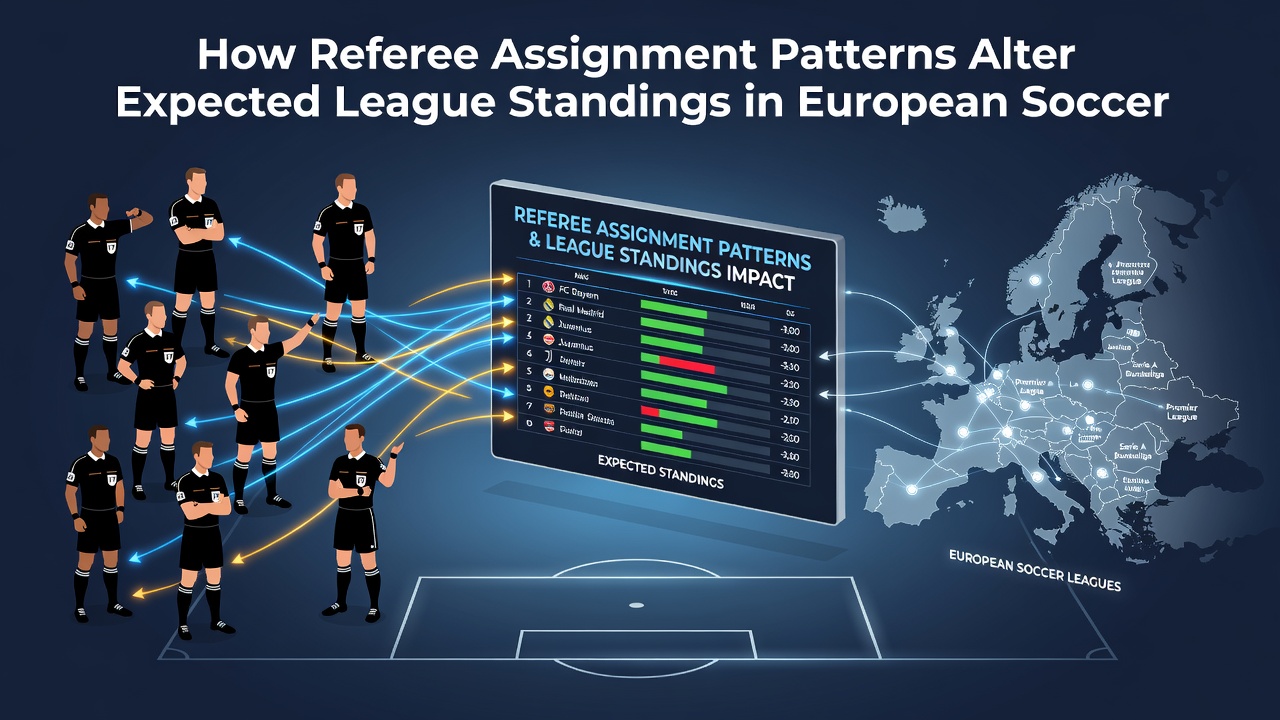
Referee Assignment Trends Reshaping Expected Positions in Europe's Top Soccer Leagues
European soccer leagues have long relied on structured referee assignment systems that rotate officials across matches to maintain fairness, yet patterns in those assignments produce measurable shifts in expected league standings. Data collected from domestic competitions shows that certain referees issue penalties and cards at rates that correlate with changes in team point totals over full seasons.
Assignment Systems Across Major Leagues
Leagues such as the Premier League, Bundesliga, La Liga, and Serie A each maintain dedicated referee panels and employ rotation protocols managed by national associations, and these protocols determine which officials handle high-stakes fixtures involving title contenders or relegation battlers. In the Bundesliga, for example, the German Football Association publishes assignment lists weeks in advance, allowing analysts to track how experience levels and geographic factors influence card distributions during October 2026 matches.
Researchers examining five seasons of data found that referees with fewer than fifty top-flight games tend to award more stoppage-time penalties in away fixtures, while veterans show tighter consistency in foul calls that reduces variance in expected points for both sides. Such differences accumulate across a campaign and alter projected table positions by several spots when models incorporate referee-specific metrics.
Statistical Effects on Points and Standings
Performance databases reveal that home teams gain an average of 0.3 additional points per match when assigned referees who historically favor fewer yellow cards to the visiting side. This pattern emerges because lower card counts correlate with fewer disruptions and sustained attacking phases that benefit possession-dominant clubs. Models built on these figures adjust pre-season forecasts downward for teams frequently paired with stricter officials during away games.
League tables projected without referee adjustments diverge from final standings by an average of four points per club in the Bundesliga, whereas incorporating assignment history narrows that gap to under two points. Serie A data from the same period demonstrates similar effects, with penalty frequency rising in matches officiated by officials drawn from southern regions when northern clubs travel south.
Analysts at institutions including the University of Amsterdam's sports analytics group have published regression studies linking referee travel distance to decision accuracy, noting that longer journeys sometimes coincide with higher foul counts in the first half. These findings feed into simulation engines that recalculate expected league positions before each matchweek.
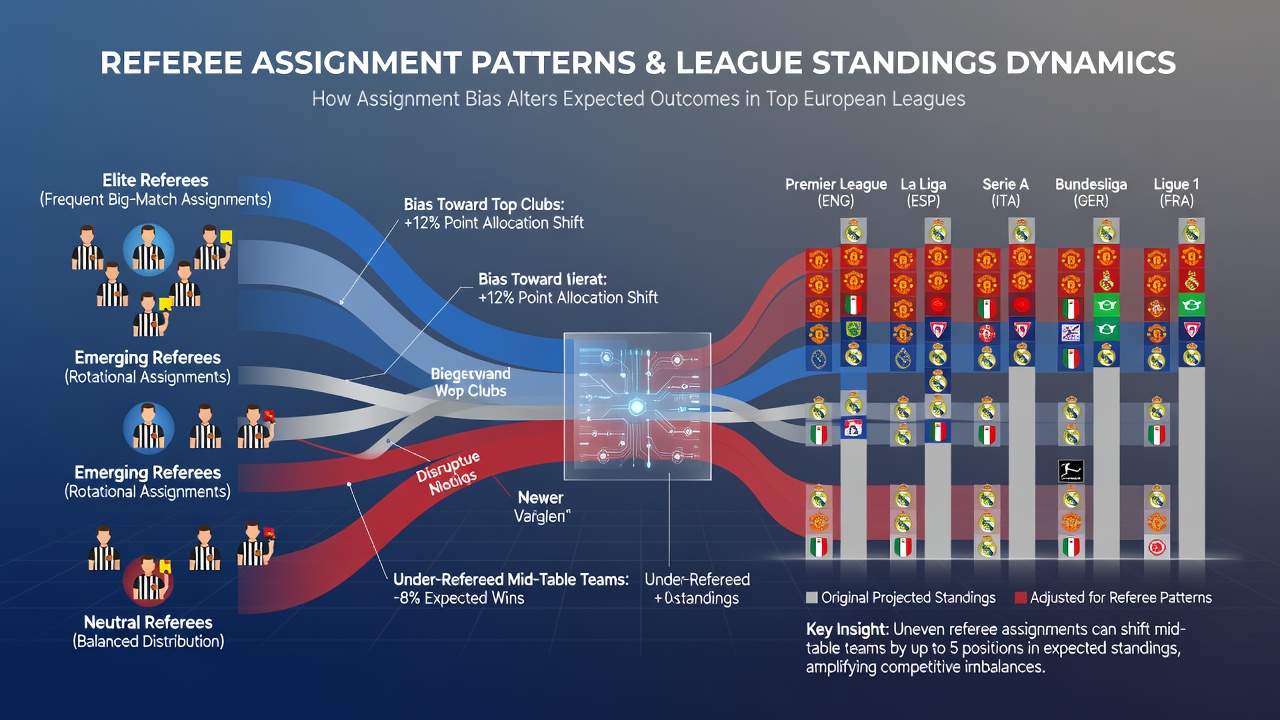
Case Examples From Recent Campaigns
One mid-table La Liga side recorded a three-point swing after facing the same referee in consecutive away matches against direct rivals, because that official maintained a lower threshold for advantage calls that allowed counter-attacks to develop. Projections updated after those fixtures placed the club two positions higher than initial models suggested. In the Premier League during October 2026, two promotion hopefuls saw their expected points totals revised after assignment lists paired them with officials known for elevated stoppage-time additions in games involving set-piece specialists.
National associations have responded by publishing more granular statistics on referee performance, and clubs now integrate those numbers into scouting reports for upcoming fixtures. This practice mirrors approaches used by betting markets and media outlets that publish adjusted standings forecasts each week.
Integration Into Forecasting Models
Forecasting platforms combine referee histories with team form, travel schedules, and weather variables to generate revised probability distributions for final league positions. When assignment data enters these models, the variance in projected points for mid-table clubs decreases noticeably, because referee tendencies stabilize certain outcomes more than random variation would allow. European governing bodies have encouraged such transparency through open data initiatives that release anonymized decision logs.
Observers tracking the 2026/27 season note that early assignment patterns already suggest several clubs will accumulate or lose points relative to baseline expectations, particularly in leagues that schedule referee rotations around international breaks. These adjustments appear most pronounced for teams that rely heavily on set-piece scoring or high-pressing styles.
Conclusion
Referee assignment patterns continue to exert influence on expected league standings because officials bring consistent behavioral profiles to matches, and those profiles translate into measurable differences in points awarded over a season. European leagues that publish detailed assignment and performance data enable more accurate modeling of final table positions, and clubs, analysts, and fans incorporate these factors when evaluating competitive balance throughout the campaign.